
Key points from the CBN Governor's address at the CIBN Bankers' Dinner
Governor Olayemi Cardoso's 28 November 2025 address covered inflation, foreign exchange, bank recapitalisation and the Bank's 2026 priorities.
DMC Business School · 19 October 2026 · 4 min read
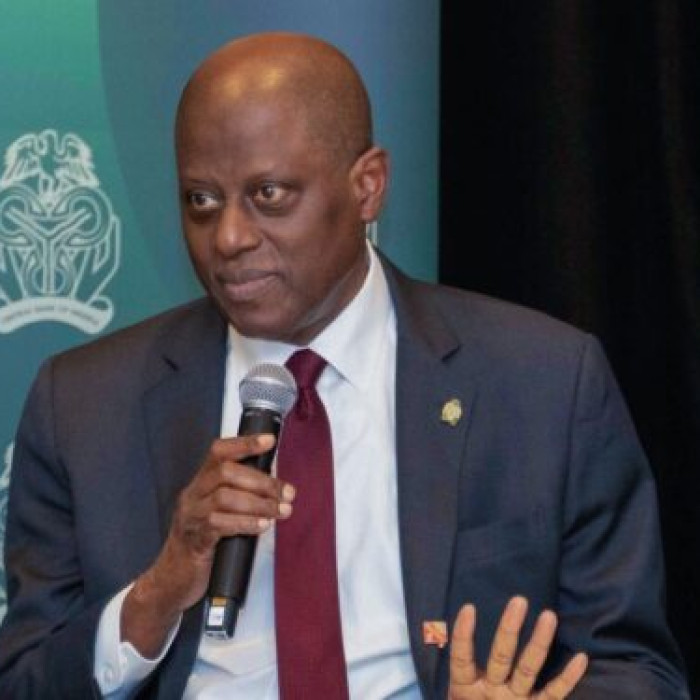
At the 60th Annual Bankers' Dinner of the Chartered Institute of Bankers of Nigeria (CIBN) on 28 November 2025, Central Bank of Nigeria (CBN) Governor Olayemi Cardoso gave a detailed account of the economy and the Bank's reforms. He also set out what the CBN plans to focus on in 2026.
For accounting, finance and economics students, the address is one of the clearest recent summaries of Nigerian monetary policy. Here are the key points.
Where the reforms started
Cardoso described the economy his team met as one that had “already gone over the cliff”. Inflation was rising, foreign exchange liquidity had dried up and there was a backlog of more than US$7 billion in unpaid foreign exchange obligations. The gap between the official and parallel market exchange rates had widened to more than 60%, and confidence in economic management was low.
Inflation is falling
Headline inflation peaked at 34.6% in November 2024. By October 2025 it had more than halved to 16.05%, after seven straight months of decline. Food inflation, the biggest part of the consumer basket, fell to 13.12% in October.
The Governor said a double-digit rate is still not acceptable. The CBN is moving to a full inflation-targeting framework, has improved its data and communication, and has ended central bank financing of government deficits. He was clear that there will be no return to that practice.
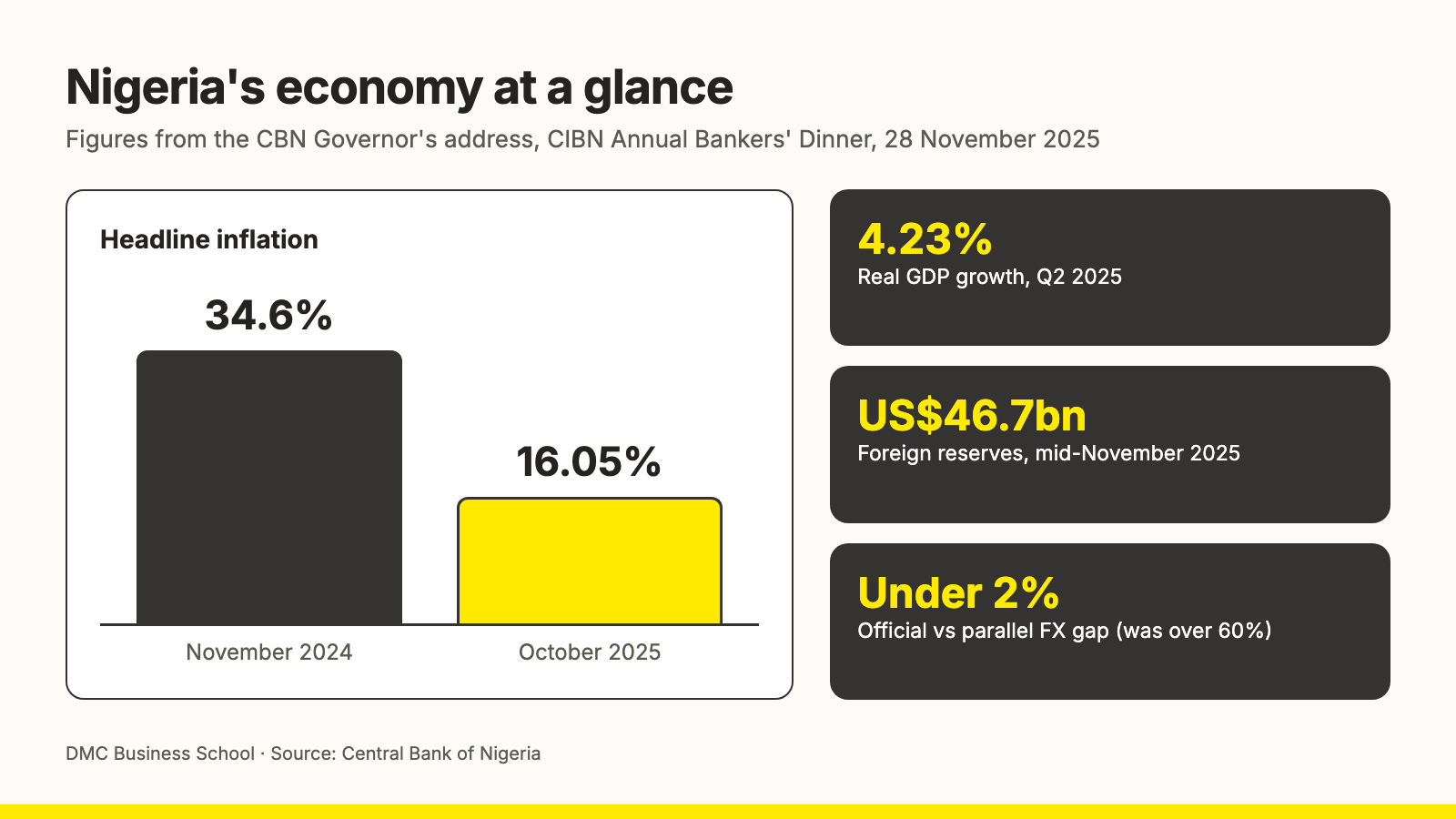
Key figures from the Governor's address.
Growth and the foreign exchange market
Real GDP grew by 4.23% in the second quarter of 2025, the fastest pace in four years, after almost a decade of growth averaging about 2%.
In the foreign exchange market, the multiple exchange-rate windows have been unified and the backlog fully cleared. A new Nigerian Foreign Exchange Code and the Electronic Foreign Exchange Management System (EFEMS) brought clearer rules and real-time oversight of trading. The gap between official and parallel rates has narrowed to under 2%.
Foreign capital inflows reached US$20.98 billion in the first ten months of 2025.
Foreign reserves rose to about US$46.7 billion by mid-November, the highest in nearly seven years and enough for more than ten months of imports.
Non-oil exports grew by more than 18% year on year, and diaspora remittances by about 12%.
Credit ratings and investor confidence
All three major rating agencies recognised the reforms. Fitch upgraded Nigeria from B- to B, Moody's raised its rating from Caa1 to B3, and S&P revised its outlook to positive. In November 2025 Nigeria raised US$2.35 billion in a Eurobond issue that drew about US$13 billion in orders.
Banks: recapitalisation on track
The Governor described the banking system as sound and resilient. The bank recapitalisation exercise is on course for its 31 March 2026 deadline: 27 banks had raised capital through public offers and rights issues, and 16 had already met the new requirements. The CBN is also moving towards Basel III standards and tightening its approach to credit risk and regulatory forbearance.
Payments, inclusion and the FATF grey list
Nigeria exited the Financial Action Task Force (FATF) grey list, which should ease cross-border payments and correspondent banking.
Financial inclusion stands at 74% of adults, with more than 3 million agent bankers across the country.
More than 12 million contactless payment cards are in circulation, and the CBN's regulatory sandbox now supports over 40 fintech firms.
Priorities for 2026
The Governor listed five practical priorities for the year ahead:
Financial system stability: protect depositors and support credit growth through strong supervision.
Price stability: refine inflation targeting and use better analytics to bring inflation down further.
Responsible innovation: support fintech while protecting consumers, strengthening cybersecurity and setting clear rules for digital assets.
Institutional capacity: build staff skills and speed up licensing and approvals.
Partnership: work closely with other regulators, the industry and international partners.
Why this matters for your exams
Questions on inflation, exchange rates, monetary policy and the banking system appear across economics, financial management and public sector papers. This address gives you current Nigerian figures and policy examples you can use to support your answers, from inflation targeting to the effect of a unified exchange rate on investor confidence.
Keep a note of the key numbers above and the reasons the Governor gave for each change. Examiners reward answers that link theory to real policy.
Browse our professional courses to study these topics with DMC Business School's lecturers.
Source: keynote address by the Governor of the Central Bank of Nigeria at the CIBN Annual Bankers' Dinner, 28 November 2025, first shared on dmcbusinessschool.com.